Engineering Management & Leadership: Navigating Technical and People Systems
You're not stepping away from engineering. You're changing where the engineering decisions happen. Instead of optimizing a single analysis or part design, you're responsible for aligning people, conflicting constraints, and tradeoffs so the entire system actually moves forward. Most days, this means making calls where every option has downsides and someone has to choose anyway.
What Engineering Managers Do
It's 3 PM on a Thursday. You're in a conference room with thermal, structures, and manufacturing. The part works thermally but can't be machined as designed. Manufacturing can build it if you change the material, but that fails the stress analysis. Structures can fix it if you add thickness, but that breaks the thermal budget. Everyone is right. Everyone's solution creates someone else's problem. Launch is in four months.
This is what engineering leadership in mechanical engineering actually is—not stepping away from engineering, but changing where the engineering happens. You're no longer optimizing a single analysis. You're aligning people, constraints, and tradeoffs so the entire system moves forward instead of thrashing in circles.
The work splits into two modes. First: translating vague executive goals ("reduce cost 15%") into actionable engineering priorities ("which assemblies do we redesign, and how much analysis risk do we accept?"). Second: making the calls that individual contributors can't—approving design tradeoffs, resolving conflicting requirements between disciplines, deciding when "good enough" is actually good enough.
You're not producing CAD files. You're conducting design reviews at 7 AM, questioning assumptions that seemed obvious until someone asked "why," setting ownership when three people think it's someone else's problem, and removing blockers that shouldn't exist but do. The work is less about being right and more about ensuring the team can execute.
Engineering Manager vs Individual Contributor
As an individual contributor, if something is broken, you fix it. You own the problem and the solution lives in your CAD file, your spreadsheet, your analysis deck. Control and accountability are the same thing.
As a manager, you're accountable for outcomes you don't directly control. Someone else runs the analysis. Someone else makes the CAD changes. Your job is shaping the environment where that work happens—clearing obstacles, making priority calls through engineering prioritization, resolving conflicts between cross-functional engineering teams that both have legitimate constraints.
The questions change completely. Not "How do I design this bracket?" but "Is this bracket the right problem to solve right now?" Not "What's the factor of safety?" but "Who should own this, and what level of rigor makes sense given the schedule pressure?" These aren't math problems. They're judgment calls under incomplete information with real consequences.
Technical depth still matters—you can't evaluate a finite element model if you don't understand boundary conditions—but it's applied differently. Through design reviews, not personal execution. Through mentoring, not showing someone how you'd do it. The quality of your decisions depends less on speed and more on whether you've thought through second-order consequences that won't show up until three months from now.
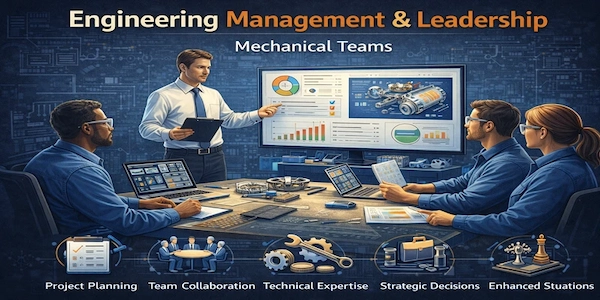
Problems They Solve Through Technical Leadership
Your thermal engineer says the heat exchanger needs 40% more surface area. Your packaging team says there's no room. Your supplier says the current design can't be manufactured at the target cost. Quality says the tolerance stack-up has a 15% chance of creating interference fits in assembly. All of these statements are true. The product still has to ship. This is Tuesday.
Most problems here aren't engineering coordination problems in the traditional sense—they're failures of alignment. Conflicting engineering requirements across disciplines. Schedule pressure forcing someone to decide which tests get cut. Resource constraints where you can solve three of five problems well, but solving all five means doing sloppy work everywhere. Ambiguous ownership where critical interfaces fall between multidisciplinary engineering teams.
These situations don't have clean equations. You're balancing risk, cost, performance, and time with incomplete information through decision making under uncertainty. Accept the thermal risk and you might have field failures. Accept the cost increase and the program gets canceled. Accept the schedule slip and you lose market window. Someone has to make the call, document why, and own the outcome.
Progress isn't measured by whether your calculations are correct—it's whether the team delivers something that works, ships on time, and survives actual use. Sometimes that means accepting a margin of safety of 1.3 instead of 1.5. Sometimes it means adding three weeks to the schedule because the risk is real. The skill is knowing which situation you're in.
Engineering Management Skills and Tools
You'll spend more time in PowerPoint, Excel dashboards, and project management software than in CAD. Your days fill with technical design reviews, verification and validation plans, schedule tracking, cost reports, and cross-functional coordination with manufacturing, quality, and supply chain. The tools are boring. The decisions aren't.
Technical fluency is still table stakes—you can't evaluate an FEA model if you don't know what boundary conditions matter, or review a test plan if you don't understand what failure modes you're checking for. But you're not running the analysis yourself. You're asking whether it's credible, whether it addresses the right assumptions, and whether the conclusions actually support the decision being made.
The real engineering management skills are less obvious. Communication that translates between product development teams who use different vocabularies for the same concept. Engineering prioritization when five things are urgent and you can't do them all well. Engineering judgment about when to trust the data and when to dig deeper because something feels wrong. The ability to say "I don't know, but here's how we'll find out" instead of guessing.
The hardest skill? Knowing when your team's analysis is lying to you. The simulation says it's fine, but your gut says otherwise. Do you delay the schedule to investigate, or do you trust the model and move forward? Make that call wrong and you're either shipping defective products or wasting weeks chasing ghosts. Make it right consistently and people start treating your judgment as an input, not just your title.
Who Engineering Management & Leadership Is a Good Fit For
Do you get more frustrated by misalignment than by hard technical problems? When a project fails, is your first thought "the design was fine, but nobody agreed on what we were building"? Do you instinctively zoom out to see how the pieces connect, and does it bother you when good individual work doesn't add up to a working system?
This path fits engineers who'd rather make decisions than execute them. Who are comfortable being accountable for outcomes they don't personally control. Who can balance technical rigor with schedule reality and know that sometimes "ship it with documented risk" is the right engineering answer, even if it's not the satisfying one.
It's less suited to engineers who want deep uninterrupted focus, who prefer tightly bounded technical problems, or who'd rather be right than move forward. If your ideal day is eight hours of analysis with nobody asking you questions, stay on the technical track. That's a perfectly good career. This isn't.
Common Misconceptions About Technical Leadership vs People Management
"Engineering managers are less technical." That's backwards. A bad calculation affects one part. A bad judgment call about what to build, when to stop testing, or which risks to accept affects the entire system. Poor decisions at the leadership level cause more field failures than poor FEA models. When root cause analysis traces a failure back to "we decided not to test that scenario," that's a management failure, not a technical one.
"Management is mostly people management." Wrong focus. Yes, you'll have one-on-ones and resolve interpersonal conflicts, but the core job is decision quality under uncertainty. Choosing what to work on and what to defer. Deciding how much analysis is enough given the schedule. Balancing conflicting constraints from groups who are all technically correct. These are engineering problems, not HR problems.
"Leadership comes from the title." It doesn't. In engineering teams, influence comes from credibility—from making calls that turn out right more often than wrong, from knowing when you don't know, from asking the question in a design review that everybody else missed. Engineers follow judgment, not org charts. The title gives you a seat at the table. What you do once you're there determines whether anyone listens.
How Engineering Management Fits Into a Mechanical Engineering Career
Most engineers don't decide one day to "become a manager." They slide into it gradually—mentoring junior engineers, owning subsystems where they coordinate work across disciplines, leading design reviews, becoming the person who resolves conflicts when two groups have competing requirements. At some point, your manager asks if you want the title to match what you're already doing.
The formal mechanical engineering leadership roles vary: engineering manager, technical lead, systems engineer, director, VP. Some companies split the tracks—pure people management versus technical leadership as principal engineer or chief engineer roles where you stay deeply technical but guide broader decisions. Both paths can work. Choose based on whether you want authority to come from role or from expertise.
The best preparation isn't an MBA—it's early exposure to how decisions propagate. Time in design, where you see how choices affect manufacturing. Time on the floor, where you discover why the thing that works on paper doesn't work in reality. Root cause analysis on failures, where you learn that most problems trace back to someone making a reasonable decision based on incomplete information.
Engineers who've seen how systems fail make better leaders because they anticipate consequences before they happen. They ask "what breaks if we do this?" instead of "can we do this?" That instinct can't be taught in a classroom. It comes from being wrong a few times and remembering how it felt.
Is Engineering Management Right for You?
Here's what nobody tells you: engineering management is not a promotion. It's a different job. If you're good at technical work and someone offers you a management role because "it's the next step," that's a trap. The skills don't transfer cleanly. The satisfaction is different. The failure modes are completely different.
If you enjoy shaping direction more than executing it, if resolving ambiguity feels productive instead of frustrating, if you're comfortable making tradeoff decisions where every option has downsides—this might be a natural fit. If you want deeper technical expertise, uninterrupted focus, and problems with clear right answers, stay on the technical track. Senior principal engineers often make more than directors anyway.
The real test: do you want to be accountable for outcomes you don't control? Because that's the job. Your team's work is your work. Their failures are your failures, even when you weren't the one who made the mistake. If that sounds energizing, maybe you're wired for this. If it sounds like a nightmare, you just saved yourself years of frustration.
If you're genuinely unsure, take a structured assessment before you commit. Figure out whether your strengths align with technical depth or system-level coordination. Because once you've been out of hands-on work for three years, going back is hard. Choose deliberately, not because someone said it's what senior engineers do.
Career Outlook & Market Data
Salary Range by Experience
Engineering Manager (0-3 years)
$85k - $105k annual base
Senior Manager (4-8 years)
$110k - $150k with bonuses
Director/VP (9+ years)
$155k - $220k+ (equity common at senior levels)
Job Market Demand
4-7% annual growth rate
Steady growth across engineering org structure
~12,000 openings/year
Projected through 2032
Consistent job market demand across manufacturing sector and product development teams
Work-Life Balance
Moderate (3.5/5 avg rating)
Typical: 45-55 hours/week
Peak seasons:
50-65 hours during launches, crises, and deadlines
Meeting-heavy schedules; availability expectations high
Job Security & Demand
Very Stable (4.6/5 rating)
Leadership always needed
Key growth drivers:
• Aging workforce creating leadership gaps
• Complex products requiring coordination
• Multidisciplinary team growth
Remote Work Flexibility
Moderate (30-40% hybrid)
Typical: 3-4 days on-site per week
On-site requirements:
• Team collaboration and coordination
• Manufacturing floor presence
More flexibility than individual contributors in some roles
Career Progression Paths
Management track (60%)
• Engineering Manager → Director → VP
• Chief Engineer or CTO roles
Technical leadership track (30%)
• Principal Engineer with team guidance
• Technical Fellow or Chief Architect
Cross-functional track (10%)
• Program management, business development
Salary and job growth data sourced from Glassdoor Engineering Manager Salaries, U.S. Bureau of Labor Statistics, and engineering leadership compensation surveys (2025-2026)
What to Expect From Engineering Management Roles
Engineering manager mechanical engineering roles span all industries that employ mechanical engineers: the manufacturing sector, aerospace, automotive, energy, consulting firms, medical devices, and consumer products across diverse product development teams.
Top Industries
- Manufacturing - Production systems, process optimization, quality leadership (28% of roles)
- Aerospace & Defense - Program management, systems integration, certification (22% of roles)
- Automotive - Product development, platform leadership, cross-functional teams (18% of roles)
- Energy - Project management, operations leadership, technical direction (12% of roles)
- Consulting - Client engagement, technical oversight, project delivery (10% of roles)
- Medical Devices & Consumer Products - Product leadership, R&D management (10% of roles)
Company Categories
- Large Manufacturing - Caterpillar, John Deere, 3M, Honeywell, Siemens
- Aerospace/Defense - Boeing, Lockheed, Raytheon, Northrop, BAE Systems
- Automotive - GM, Ford, Tesla, Rivian, Toyota, Stellantis
- Energy - GE Vernova, Siemens Energy, Exxon, Chevron, Shell
- Consulting - McKinsey, BCG, Bain, Deloitte Engineering
- Medical Devices - Medtronic, Stryker, Boston Scientific, Abbott
- Startups/Scale-ups - Emerging tech companies with growing engineering teams
Company Size Distribution
30% Mid-size (500-4,999)
12% Small/Growing (50-499)
3% Consulting Firms
Top Geographic Markets
Germany (Stuttgart, Munich, Hamburg)
United Kingdom (London, Cambridge, Manchester)
Canada (Toronto, Montreal, Vancouver)
Asia-Pacific (Singapore, Shanghai, Tokyo)
Remote Work Trends
30% Hybrid (2-3 days remote)
60% Primarily On-site
Team leadership often requires physical presence
Team Structure
Cross-functional: Design, analysis, testing, manufacturing
Report to: Director or VP Engineering
Matrix structures common in large orgs
Industry and employment data from LinkedIn Talent Insights: Engineering Manager roles, Indeed Job Market Analysis: Engineering Manager, and engineering leadership recruiting data (2025-2026)