Should You Become a Consulting or Applications Engineer?
You're the technical bridge between what the catalog says a product can do and what a customer's actual operating conditions will demand. The question isn't whether the equipment works—it's whether it will work in their specific application, with their constraints, in their environment, when you don't have complete information and the purchase order deadline is tomorrow.
What Consulting & Applications Engineers Actually Do
A customer calls at 2:47 PM. Their pump is cavitating at 3,200 RPM in a slurry application at 82°C. The datasheet says it should handle 3,600 RPM at fluids up to 90°C. They want to know if swapping to your Model 447B will fix it, and they need an answer before their production meeting tomorrow morning. Whether this works or fails in the field will be traced back to what you tell them in the next six hours.
This is the applications engineer role and consulting engineering combined: customer-facing engineering that bridges technical capabilities with real-world constraints. The work splits into interrogation and verification. First: What exactly is "slurry"? Specific gravity? Particle size? Suction conditions? Customers describe symptoms, not requirements. Second: You run pump sizing calculations, assess engineering margins and assumptions against non-standard operating conditions, and explain whether the proposed solution will actually work—or why it won't.
Most applications engineering responsibilities happen before equipment ships. Success means mechanical system performance meets expectations once it reaches the field. Failure means expensive retrofits, warranty claims, or field failure prevention that didn't happen. This is engineering sales support that requires engineering judgment under uncertainty.
How Consulting & Applications Engineering Differs From Other Mechanical Roles
Design engineers spend months refining product architecture. The applications engineer mechanical role works with what already shipped—your job is product application engineering that determines if it fits use cases the design team never anticipated. A marine pump designed for seawater might work in a phosphoric acid application, but material compatibility engineering and engineering risk assessment become critical. You're the person making system-level engineering decisions about whether "might work" is good enough or reckless.
The difference is accountability without authority. Three months after you recommend a configuration, a customer asks why their system isn't performing to spec. You need engineering documentation that references the operating conditions they described, the engineering assumptions you made, and the engineering verification calculations you ran. If any piece is missing or wrong, the field failure is yours even though you didn't design the product or install the equipment. This is what applications engineers do: engineering decision making with incomplete information.
Here's what really separates it: you're making engineering recommendations about systems you've never seen in environments you can't test. You trust your engineering credibility because you've learned engineering problem diagnosis through engineering pattern recognition from past failures, not because you have perfect information. Ever.
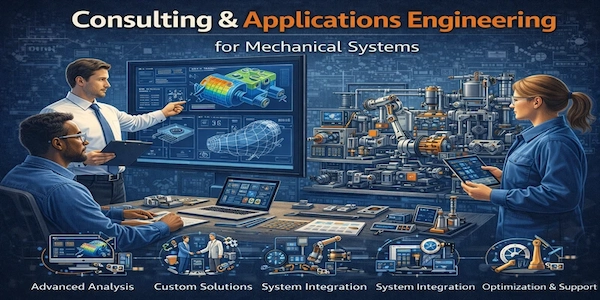
The Types of Problems Consulting & Applications Engineers Solve
A customer's heat exchanger is fouling after 380 hours instead of the projected 2,200 hours. Fluid properties match the datasheet. Flow rate is within spec. But something—startup transients, temperature spikes, trace contaminants they didn't mention—is causing accelerated heat exchanger fouling. They want to know if switching to a different tube configuration will fix it, and downtime costs $14,600 per hour. This is the kind of engineering troubleshooting problem that doesn't fit into neat categories.
Most challenges require cross-functional engineering coordination and cascade through the system. Increase tube velocity to reduce fouling, and you've raised pressure drop, which affects pump sizing calculations, which changes motor selection, which might require a different electrical panel—each requiring coordination with separate stakeholders. Recommend a corrosion-resistant alloy for material compatibility engineering, and you've changed thermal conductivity, welding procedure, and cost enough that project economics don't work. These are application-specific engineering challenges.
The questions in what consulting engineers do and what applications engineers do overlap: Will this actuator survive 1.8 million cycles at 68% duty cycle in -12°C with cutting fluid mist? Can this bearing handle 12% radial misalignment that wasn't in the spec but exists in the installation? What happens to vibration limits when the mounting surface is 40% stiffer than the test rig? This requires engineering failure analysis skills, thermal expansion analysis, and engineering validation. Show your work. Bring engineering margins and assumptions. Practice engineering conservatism, but not so conservative that every solution becomes overbuilt and uneconomical.
Tools and Skills Used in Consulting & Applications Engineering
You'll use Excel more than CAD for equipment selection engineering. The geometry already exists—your job is screening whether it fits the application. Pump curves for pump sizing calculations, sizing calculators for mechanical systems applications, thermal expansion estimators for thermal expansion analysis, material compatibility charts for material compatibility engineering, and internal selection tools built from decades of field data. Occasionally you'll run a quick thermal simulation for engineering verification, but that's verification, not design.
What separates competent applications engineers from trusted ones is engineering pattern recognition and fluency in the unwritten rules: which vendor datasheets are conservative, which customer industries over-specify, what "clean service" actually means in a refinery versus a semiconductor fab. You're building pattern recognition from case histories through engineering failure analysis—this configuration failed in Kansas City because of ammonia exposure; that bearing wore prematurely in a paper mill due to misalignment the customer insisted wasn't there. This is technical consulting engineering combined with engineering customer support.
The hardest skill? Knowing when to say "I need more information" instead of guessing. Engineering liability decisions require complete information. A customer wants a fast answer for engineering sales support. Sales wants you to close the technical question. But you don't have the operating pressure profile, actual fluid composition, or installation orientation. Do you make engineering assumptions and risk over-specifying, or push back for data and risk losing the opportunity? The answer determines whether you're an order-taker or an engineer practicing engineering judgment under uncertainty.
Who Consulting & Applications Engineering Is a Good Fit For
Do you instinctively ask "what are you actually trying to accomplish?" when someone requests a specific product? When you read an engineering specification review, do you immediately think about what non-standard operating conditions would violate those limits? Do you get frustrated when someone says "just make it work" without defining what "work" means in measurable terms? Customer-facing engineering roles like this might be your field.
The work attracts engineers who think in engineering tradeoffs and constraints rather than idealized solutions. People who enjoy engineering problem diagnosis more than building things from scratch. Who would rather spend twenty minutes asking clarifying questions for RFQ technical review than three hours analyzing the wrong scenario.
But if you've ever caught an error in someone's RFQ that would have made their system unworkable, if you find satisfaction in field failure prevention before they happen, if you want to see your engineering recommendations applied across industries instead of refined in one product line—this engineering specialization mechanical offers that kind of engineering.
Common Misconceptions About Consulting & Applications Engineering
Misconception #1: "It's less technical than design or analysis work."
Wrong. The consulting engineer role and applications engineer mechanical position require making engineering decision making with less information, shorter timelines, and higher uncertainty than design engineers face. Recommend the wrong motor frame and it burns out at 11,400 hours instead of the expected 50,000. Underestimate thermal expansion analysis and the flanges leak during startup. Size a valve actuator wrong and it can't close against pressure. Poor engineering judgment under uncertainty creates field failures that cost more to fix than field failure prevention would have cost—and you get exactly one chance to be right before the equipment ships.
Misconception #2: "It's mostly sales with technical window dressing."
No. Technical sales engineering requires engineering credibility. Your consulting engineering responsibilities include making sure those deals don't turn into warranty disasters. You're the person who says "we can't guarantee this will work in that service" when the sales team is 48 hours from month-end quota. Your credibility in product application engineering depends on being technically conservative even when it costs revenue.
Misconception #3: "It's all cutting-edge technology."
Some days you're explaining for the fourteenth time why installing a centrifugal pump below minimum flow will cause recirculation damage. Or reviewing a customer's engineering specification review that copied requirements from three contradicting standards. The work in industrial equipment engineering matters, but it's not a recruitment poster. If you need every project to be novel, you'll be disappointed.
How Consulting & Applications Engineering Fits Into a Mechanical Engineering Career
Year 1-3: You're shadowing senior applications engineers and handling straightforward requests in the applications engineering career path. Pump selections for water service. Motor sizing for fixed-speed fans. Your engineering recommendations get reviewed by someone with twelve years of field experience who finds the engineering assumptions you forgot to verify. This is normal in the consulting engineering career path.
Year 4-8: You're owning applications where the answer isn't in the catalog through application-specific engineering. A chemical customer with non-standard operating conditions. A mining operation where altitude affects mechanical system performance. A power plant with steam conditions that push temperature limits. You're defining the engineering risk assessment approach, running engineering sizing calculations, coordinating with product engineering through cross-functional engineering coordination, and signing your name to the engineering recommendations.
Year 9+: You're either becoming a subject matter expert in consulting and applications engineering (handling applications nobody else can evaluate) or moving into applications engineering management, product management, or technical sales engineering roles.
The skills transfer extraordinarily well to engineering roles in manufacturing, engineering roles in automation, engineering roles in HVAC, engineering roles in fluid systems, engineering roles in energy systems, and engineering roles in medical devices. Once you've learned to make system-level engineering decisions with uncertainty and communicate them to non-engineers, most other engineering roles feel more straightforward—you've already developed the engineering judgment under uncertainty that takes others years to build.
Is Consulting or Applications Engineering Right for You?
Here's the litmus test for consulting vs applications engineer decision-making: A customer sends an inquiry at 3:15 PM for a pump that needs to be quoted by end of business tomorrow. The fluid is "similar to water" but with "some solids." Flow rate is a range: 180-240 GPM. Temperature is "ambient" but the application is outdoor in Phoenix. You could make engineering assumptions, run a quick equipment selection engineering analysis, and send three options with a disclaimer. Or you could email back asking for specific gravity, particle size, actual temperature range, and suction conditions for proper engineering verification—knowing this might delay their quote past the deadline. What do you do?
If your instinct is "get the real data even if it's inconvenient," demonstrating engineering conservatism, you'll fit here. If it's "make reasonable assumptions and move fast," you'll struggle with engineering liability decisions. Applications engineering and consulting engineering reward technical conservatism over speed in customer-facing engineering roles.
This work suits people who: enjoy solving different problems every week in mechanical systems applications, find satisfaction in field failure prevention rather than inventing breakthroughs, can switch between engineering customer support conversations and detailed technical calculations, and have patience to explain engineering tradeoffs to people who don't share your vocabulary. This is what defines the applications engineer role and consulting engineer mechanical position.
Still uncertain about engineering career fit? A structured assessment can map how you actually make engineering decision making under uncertainty against what applications engineering responsibilities and consulting engineering responsibilities actually demand, before you commit years to a path that might not match your working style.
Career Outlook & Market Data
Salary Range by Experience
Applications Engineer (0-3 years)
$65k - $85k annual base
Senior Applications Engineer (4-8 years)
$90k - $125k with bonuses
Principal/Lead (9+ years)
$130k - $175k+ (technical sales leadership or product management track)
Job Market Growth
6-9% annual growth rate
Strong growth (companies need customer-facing technical expertise)
~15,000 openings/year
Projected through 2032
High demand across industrial equipment, automation, and systems companies
Work-Life Balance
Moderate to Good (3.8/5 avg rating)
Typical: 40-50 hours/week
Peak seasons:
50-60 hours during customer emergencies, trade shows, or project launches
Customer-facing schedules; some travel required (20-40%)
Job Security & Demand
Stable (4.2/5 rating)
Companies always need customer-facing technical support
Key growth drivers:
• Complex products requiring technical expertise
• Customization and application specificity
• Cross-industry product diversification
Remote Work Flexibility
Moderate (30-50% hybrid)
Typical: 2-3 days remote per week when not traveling
On-site requirements:
• Customer site visits and field support
• Trade shows and industry events
Travel varies by industry and territory
Career Progression Paths
Applications/Technical Sales track (50%)
• Senior Applications Engineer → Technical Sales Manager
• Director of Applications Engineering
Product Management track (30%)
• Product Manager or Product Line Manager
• Director of Product Management
Technical Consulting track (20%)
• Senior Consultant or Technical Advisor
Salary and job growth data sourced from Glassdoor Applications Engineer Salaries, U.S. Bureau of Labor Statistics (Sales Engineers), and technical consulting industry compensation surveys (2025-2026)
What to Expect From Consulting & Applications Engineering Roles
Consulting and applications engineers work across nearly every sector that produces or integrates complex mechanical systems: industrial equipment, automation, HVAC, fluid systems, medical devices, energy systems, and more.
Top Industries
- Industrial Automation & Controls - System integration, process equipment, motion control (25% of roles)
- HVAC & Building Systems - Commercial equipment, energy efficiency, system design (18% of roles)
- Fluid Systems & Pumps - Pump selection, piping systems, hydraulics (15% of roles)
- Manufacturing Equipment - Production systems, tooling, custom machinery (14% of roles)
- Energy & Power - Turbines, compressors, power generation systems (12% of roles)
- Medical Devices & Instrumentation - Equipment selection, regulatory support (16% of roles)
Company Categories
- Industrial Equipment OEMs - Emerson, Rockwell, ABB, Siemens, Schneider Electric
- HVAC/Building Systems - Trane, Carrier, Johnson Controls, Daikin
- Fluid Systems - Grundfos, Flowserve, Xylem, ITT, Sulzer
- Manufacturing Equipment - DMG Mori, Haas, Okuma, Mazak
- Energy Equipment - GE Vernova, Baker Hughes, Ingersoll Rand
- Engineering Consultancies - Jacobs, AECOM, Black & Veatch, Burns & McDonnell
- Distributors & Integrators - Grainger, MSC Industrial, Applied Industrial Technologies
Company Size Distribution
30% Mid-size Equipment Supplier (200-999)
15% Small Specialized Companies (50-199)
10% Distributors/Integrators
Top Geographic Markets
Germany (Munich, Stuttgart, Hamburg)
United Kingdom (London, Birmingham, Manchester)
Canada (Toronto, Montreal, Calgary)
Asia-Pacific (Singapore, Shanghai, Tokyo, Seoul)
Travel Requirements
Customer site visits Most common
Trade shows/training Quarterly events
Territory-based roles have regional travel
Team Structure
Cross-functional: Sales, product, R&D, manufacturing
Report to: Applications Engineering Manager or Sales Director
Often territory or product-line focused
Industry and employment data from LinkedIn Talent Insights: Applications Engineer roles, Indeed Job Market Analysis: Applications Engineers, and technical sales recruiting data (2025-2026)